Pricing explainer
Article backlink price: what each band buys
Prices on the marketplace run from $1 to about $500 per link. The spread looks absurd until you see what moves it.
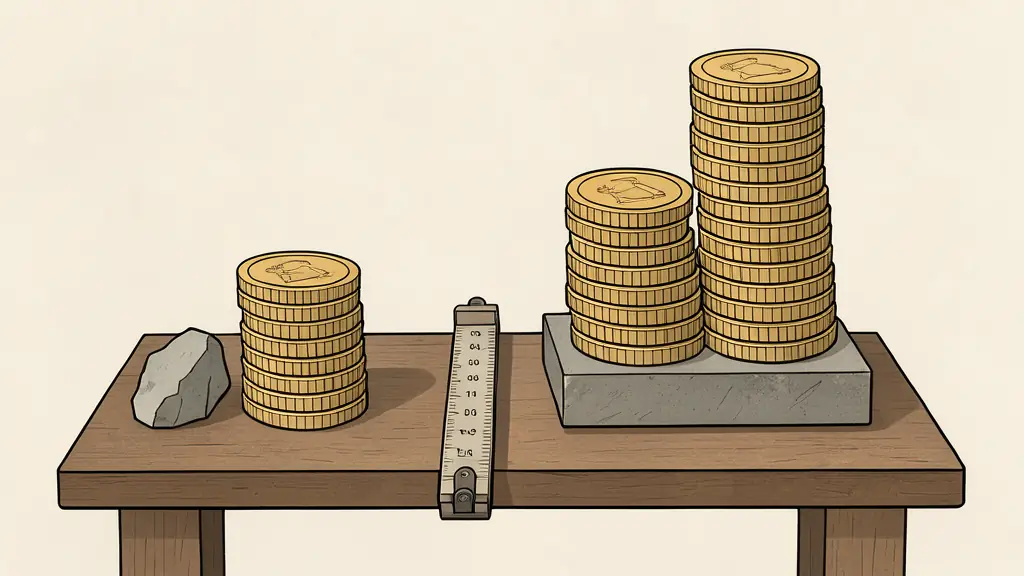
Three bands, described honestly
These are our descriptions of the typical rows in each band, not fixed products. Real prices are shown per donor.
Entry
$1 to $15per link
- Small sites, modest traffic
- Good for testing the process
- Weak signal on its own
Middle
$15 to $80per link
- Established niche sites
- Visible organic traffic
- Where most careful buyers spend
Top
$80 to about $500per link
- High authority, large traffic
- Fewer rows, slower to choose
- Worth it for pages that earn money
What moves the price
Four things. Authority, traffic, niche and language. A row with strong Domain Rating but little traffic often costs less than a smaller site that readers actually visit.
Niche is the sneaky one, because finance, health and gambling topics cost more to host. If your page is in one of them, expect to pay at the upper end of a band, and expect fewer donors to accept the topic at all.
Price also tells you nothing about fit. A $300 placement on an irrelevant site is a worse buy than $20 on a relevant one.
Trust the numbers a little, the topic a lot.
What we would do with $100 and with $1,000
| Budget | Example split | Reasoning |
|---|---|---|
| $100 | Two entry rows, two middle rows | Learn the process and compare results across bands |
| $1,000 | Six middle rows, one top row, a reserve | Spread risk and keep money for the winners |

Reading one row before you spend
Each row on the list carries six facts. Domain Rating, organic traffic, referring domains, niche, language and price: use them in roughly that order of suspicion, since any one of them can look good while the others do not.
Start with traffic, because it is hardest to fake. Then look at the niche, then at referring domains, which can be padded by spam links pointing at the donor. Domain Rating comes last. It is Ahrefs' score, not one Google publishes.
Language matters when your page is local. A German clinic gains little from an English hobby blog, whatever the price says, and the ordering walkthrough shows where the language filter sits.
A row that is strong on all six is rare. Expect trade-offs, and decide which one you can live with.
If a seller offers 100 links for $50, ask what the unit is. Directory submissions, comment links and profile pages are not the same product as an article on a live site.
Why not just pick the cheapest
Because the link is only part of what you pay for. You also pay for the review, the checking and the wait.
A $1 row is a fine experiment, and we say so plainly. Cheap buys a test. If a campaign is meant to support a page that earns money, the spread between $5 and $40 is small next to the cost of getting the wrong niche. Revisit the history of article directories if you want to see what cheap-at-scale turned into.
Price against the job the page has to do
An article backlink price only makes sense next to the page it serves. The same row can be a sensible buy for one page and a waste for another, depending on what that page already does.
The three cases below are hypothetical. They are a way to think about the match, not a forecast of what any row will return.
A page that already earns
Say a page sells a service and brings in enquiries every month. A stronger row is easier to justify there, because a good link can add to traffic the page already receives.
Even so, the same budget spread across a few relevant rows usually teaches more than one top row, because you learn how each donor behaves.
A page that is still new
Say the page went live last month and has almost no visits. A top row asks the link to do the work of time and content, and that is a heavy load for one placement.
A middle or entry row with a plain anchor is a calmer way to see whether the page gets found at all.
Count the rows you can afford to lose, and decide that before you buy. A test you cannot afford to lose is a bet, not a test.
A page with no readers yet
Picture a page that nobody has visited. Any link, at any price, points at a page with nothing to pass along.
Fix the page first, then decide whether a link should follow. The order matters more than the number on the invoice.
Price questions people ask before they buy
Why does a $1 row exist at all?
A single entry placement can be a cheap test of the donor and of your page. It is weak evidence on its own, and that is exactly why it suits a first test. Treat it as a probe, not as a strategy.
Is a $500 row always the better buy?
No. Price follows authority, traffic and niche, and a top domain in the wrong niche is a poor fit for your page. Compare the row against the page it will point at, and let the topic decide before the number does.
Does a higher price mean a faster article?
Delivery is described as usually within about 24 hours of payment, and that is the figure to plan around. A higher price buys a stronger donor, not a promise of speed.
How many rows should a first budget cover?
Three is a practical number. One cheap, one middle and one strong row give you three readings from the same period, which teaches more than one large order. The ordering walkthrough shows the path.
Testing a band over several rows
One row tells you about one donor. A band only starts to make sense once you have compared several rows that sit in the same price range, bought on the same terms.
The habit that helps most is boring. Write the same fields down for every row before you look at any result.
Comparing like with like
Two rows from the same band are a fairer comparison than a $1 row set against a $300 one. Put them on the same topic where you can, and record the same fields for each.
Note the anchor, the purchase date, the donor's traffic at that moment and the target page. A row you cannot describe in those terms is hard to judge later.
A simple test is to ask whether a stranger reading your sheet could tell which row you would buy again and why. If not, the sheet needs more detail.
Waiting before a verdict
Judge a row only after a long enough wait, and do not judge a whole band on one row. Two readings from different bands tell you more than a single row tells you about anything.
Keep the waiting period the same for every row, so the comparison stays fair even when one row looks promising early.
Set the review date when you buy, and keep it. Revisiting a row early tends to produce a reading that flatters the decision you already made.
Keeping the sample honest
Small samples mislead in both directions. Write down which rows you tried and which you dropped, so the list cannot be quietly edited toward the answer you wanted.
Say you ran two rows and one looked strong. That is a lead to follow, not a finding to sell on.
Before comparing quotes
- Same link type: placement or insertion?
- Same permanence: is it permanent or time-limited?
- Dofollow stated in writing
- Traffic shown from a named tool such as Ahrefs or Semrush
- Delivery time and how you verify it
- Refund terms and who writes the text
What a price band does not buy
A band is a price for a placement, not a contract for a result. Knowing where a row sits helps you compare, but it cannot tell you how the page will fare.
It helps to be specific about the limits before the money leaves your balance.
Control over the donor's other links
You do not control what else a donor publishes. A row can look clean today and carry different neighbours next year, so reread the donor now and then.
Note the date you bought, and the date you last looked. The gap between them is where most surprises hide.
A guaranteed position
Two identical rows can produce different results for months, and no band changes that. Any seller who promises a position for a price is describing a hope.
Judge the row on donor quality and fit, and treat any movement in search as one signal among many.
A reason to skip the reading
A high price does not replace reading the article. Open the donor's recent posts, check that the topic fits, and read the placement once it is live.
Ten minutes of reading usually costs less than the mistake it prevents.
